Testing and Material Type Identification
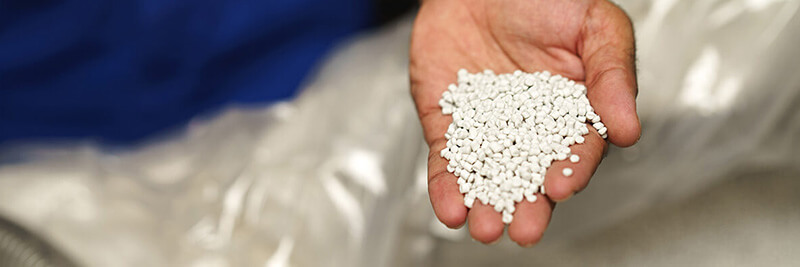
Plastic Testing and Material Type Identification in Salt Lake City
It is not uncommon for companies to have inventory in their warehouse that they aren't sure what material type it is. With just a small sample, we are able to identify the material type and properties.
Overview of Testing and Material Type Identification
Unidentified plastic can quickly become a costly warehouse problem. A company may have gaylords of production scrap, unused resin, discontinued inventory, rejected parts, pellets, regrind, or purgings without reliable labels or documentation. The material may still have value, but it can be difficult to recycle, sell, blend, or return to production when no one can confirm what type of plastic it is. Reaction Polymers provides testing and material type identification in Salt Lake City to help businesses better understand unknown thermoplastic materials and determine an appropriate next step. In many cases, only a small representative sample is needed to begin evaluating the material. Reaction Polymers can examine the sample to identify the likely plastic type and relevant properties. This information can help determine whether the material may be suitable for recycling, reprocessing, blending, resale, or another industrial application. Plastic identification is important because many thermoplastic resins can look remarkably similar. Polyethylene, polypropylene, ABS, nylon, polycarbonate, acrylic, PETG, polystyrene, and PVC may be difficult to distinguish through appearance alone, particularly when the material has been colored, ground, molded, or stored for a long period. Even an experienced warehouse employee may not be able to identify an unknown resin reliably by looking at it. Using the wrong material can create serious production issues. An incompatible resin may process at a different temperature, melt inconsistently, produce weak parts, create surface defects, clog equipment, or contaminate a larger batch of otherwise usable plastic. A small amount of incorrectly identified material can reduce the value of an entire gaylord or make a blended load unsuitable for recycling. Testing helps reduce that risk. Reaction Polymers can evaluate a representative sample before the unknown material is mixed with another resin, placed into production, or transported as a recyclable commodity. Identifying the material early can prevent additional handling costs and protect clean, properly sorted inventory from contamination. Companies often discover unknown plastic during warehouse cleanouts, inventory audits, facility relocations, ownership changes, equipment upgrades, or product transitions. Labels may have fallen off containers, paperwork may no longer be available, or employees familiar with the material may have left the organization. Other times, a company receives returned material or inherited inventory with incomplete documentation. Material identification can also be helpful when scrap is generated from an unfamiliar product or manufacturing process. A company may know that the part is plastic but not whether it is ABS, polycarbonate, nylon, polypropylene, or another thermoplastic. Identifying the resin can make it easier to establish the correct recycling container, prevent co-mingling, and determine whether a buyer or processing market is available. Reaction Polymers works with post-industrial plastics and understands that material value depends heavily on accurate identification. A clearly identified, clean, and separated resin is generally easier to evaluate than a mixed or unknown load. Once the material type is known, additional factors such as color, form, quantity, contamination, heat history, and packaging can be considered. A representative sample should reflect the material contained throughout the larger batch. If a gaylord appears to contain several colors, shapes, or sources, samples from multiple areas may be necessary. One piece taken from the top of a container may not accurately represent material located in the center or bottom. Providing accurate background information can also improve the evaluation. Helpful details may include where the material came from, how it was used, whether it is virgin resin or regrind, the manufacturing process involved, the approximate age of the inventory, known processing temperatures, and any product specifications that remain available. Original labels, photographs, safety data sheets, purchase records, and part samples may provide additional context. Testing may help determine the likely polymer family and key material properties, but it does not automatically establish that the entire inventory is uniform. A single sample can represent only the material submitted for evaluation. If the larger quantity has been collected from multiple sources, stored in open containers, or mixed over time, additional sampling may be needed to assess consistency. This distinction is especially important for plastic recycling. Different thermoplastic types generally should not be mixed together unless they are part of a known and controlled formulation. Co-mingled resin may have little market value because the materials can behave differently when melted and processed. Proper identification helps companies establish separate material streams before contamination occurs. Once an unknown resin has been identified, Reaction Polymers can help discuss possible next steps. Depending on the material and quantity, we may be able to purchase the plastic, provide toll shredding or granulating, blend it with another compatible material, reprocess it, or incorporate it into a custom compound. If the material does not fit an available recycling or processing program, the customer receives more useful information for making an informed decision. Material testing can also support purchasing decisions. Manufacturers considering recycled resin, regrind, or excess inventory may want greater confidence that the material corresponds with the expected polymer type. Identifying a sample before purchasing a larger quantity may help reduce the risk of receiving material that is unsuitable for the intended application. Testing is also valuable when companies want to reuse their own plastic scrap. Before production material is returned to the manufacturing process, the resin should be correctly identified and kept separate from incompatible plastics. Confirming the material type can help determine whether toll grinding, blending, or re-pelletizing may be appropriate. Color alone should never be used as the primary method of identifying plastic. Black pellets from two different containers may be entirely different resins. Clear plastic could be acrylic, polycarbonate, PETG, polystyrene, or another material. Natural-colored regrind can also include several possible polymers. Material testing provides more dependable information than appearance-based assumptions. The same caution applies to density, flexibility, hardness, odor, or how a plastic burns. These observations may offer clues, but they can be influenced by fillers, colorants, plasticizers, additives, moisture, and previous processing. A professional evaluation provides a more reliable basis for decisions involving valuable inventory or manufacturing equipment. Businesses searching for plastic identification services in Utah can begin by gathering a clean representative sample and any available history about the material. Reaction Polymers can review the sample, identify the likely resin type and properties, and help determine whether the larger inventory may have recycling or processing potential. Do not allow unidentified material to remain unused simply because the original label or documentation is missing. Contact Reaction Polymers to discuss the plastic, its source, approximate quantity, current form, and intended use. A small sample may provide the information needed to recover value, organize inventory, and move the material toward a productive next step.
A Company You Can Trust
Accurate material identification requires experience with thermoplastics and an understanding of how different resins behave. Reaction Polymers has worked within the plastics recycling industry since 1996 and regularly handles post-industrial materials in a range of forms, colors, and conditions. This hands-on experience helps us evaluate more than the appearance of a sample. The team understands how resin type, additives, fillers, color, contamination, and heat history can affect the material and its potential uses. That broader perspective is valuable when the purpose of testing is not simply to name the plastic, but to decide what should happen to it next. Reaction Polymers approaches each evaluation carefully. Customers are encouraged to provide representative samples and honest information about how the material was collected or stored. If the inventory may contain several different materials, that possibility should be identified before testing begins. Clear expectations are important. Identifying one sample does not guarantee that every piece in a large container is identical. Reaction Polymers can explain when additional samples may be appropriate and what limitations should be considered before making decisions about an entire load. We also recognize that testing information may affect significant operational choices. A customer could use the results to decide whether to recycle several thousand pounds of material, blend it into production, sell it, or remove it from valuable warehouse space. The goal is to provide practical guidance based on the material submitted rather than making assumptions that could create additional problems. Reaction Polymers can also help customers understand how identification relates to recyclability. A known resin may still require further evaluation based on cleanliness, color, volume, contamination, packaging, and current market demand. Material identification is an important starting point, but it is one part of a complete recycling assessment. Integrity is central to the process. Customers receive straightforward information about what can be determined from the sample and whether the material appears suitable for additional services. If further testing, more samples, or another course of action is needed, Reaction Polymers can explain the next step clearly.
Why Clients Choose Reaction Polymers
Companies choose Reaction Polymers because material identification is connected to real industrial recycling and processing capabilities. The service is not performed in isolation. Once the likely resin type is known, customers can discuss practical options for selling, processing, blending, reusing, or managing the material. Reaction Polymers understands the materials commonly found in manufacturing environments. These may include polycarbonate, polyethylene, PETG, acrylic, ABS, polypropylene, flexible PVC, rigid PVC, nylon, polystyrene, cellulosics, and other thermoplastics. This familiarity helps us evaluate samples in the context of industrial plastic recycling and reuse. Customers also benefit from a simple sampling process. An entire gaylord or truckload does not necessarily need to be transported just to begin identifying the material. A small, carefully selected sample may provide enough information for an initial evaluation, saving time and avoiding unnecessary transportation. The service can help companies reclaim warehouse space. Unknown resin often remains untouched because employees do not know whether it should be recycled, discarded, or returned to production. Once the material has been evaluated, the business can make a more informed decision instead of allowing inventory to sit indefinitely. Testing can also protect valuable material streams. When an unknown resin is identified before it is combined with clean plastic, we reduce the risk of contaminating a larger quantity. This can preserve recycling value and make the warehouse’s sorting procedures more reliable. Manufacturers appreciate that Reaction Polymers offers related services under one roof. When appropriate, identified material may move into toll shredding and granulating, material mixing and blending, custom compounding and reprocessing, or a plastic purchasing program. This can reduce the need to coordinate testing and processing with several unrelated companies. Reaction Polymers can assist with both planned and unexpected material challenges. A company may be evaluating a single gaylord discovered during a warehouse cleanup or establishing an identification process for recurring production scrap. Each project begins with the material itself, the available documentation, and the customer’s intended goal. The team also helps customers understand that identifying the resin is not the final step. Quantity, cleanliness, color, consistency, and packaging still influence whether a recycling or manufacturing opportunity is available. This complete approach helps companies avoid decisions based on incomplete information. Whether you have unidentified pellets, regrind, molded parts, purgings, sheets, profiles, or other thermoplastic inventory, Reaction Polymers can help evaluate the material. Provide a representative sample along with any known history, estimated quantity, color, form, and intended use to begin the identification process.
Key Benefits:
- Durability: Premium materials and expert craftsmanship ensure your remodel stands the test of time.
- Functionality: Designed around your lifestyle, every layout improves flow, comfort, and usability.
- Curb Appeal: Updated interiors and exteriors that elevate your home’s first impression.
- Energy Efficiency: Modern insulation, windows, and systems that save money year after year.
- Peace of Mind: Licensed, insured, and locally trusted since 1990—our team delivers quality you can rely on.
Gallery



Business Hours
Mon: 8 AM–5 PM
Tue: 8 AM–5 PM
Wed: 8 AM–5 PM
Thu: 8 AM–5 PM
Fri: 8 AM–5 PM
Sat: Closed
Sun: Closed
Content on this website, including text and images, is protected under applicable copyright laws. Copying, downloading, redistribution, or reproduction of this material, in whole or in part, is strictly prohibited. Terms of Use | Privacy Policy