Material Mixing and Blending
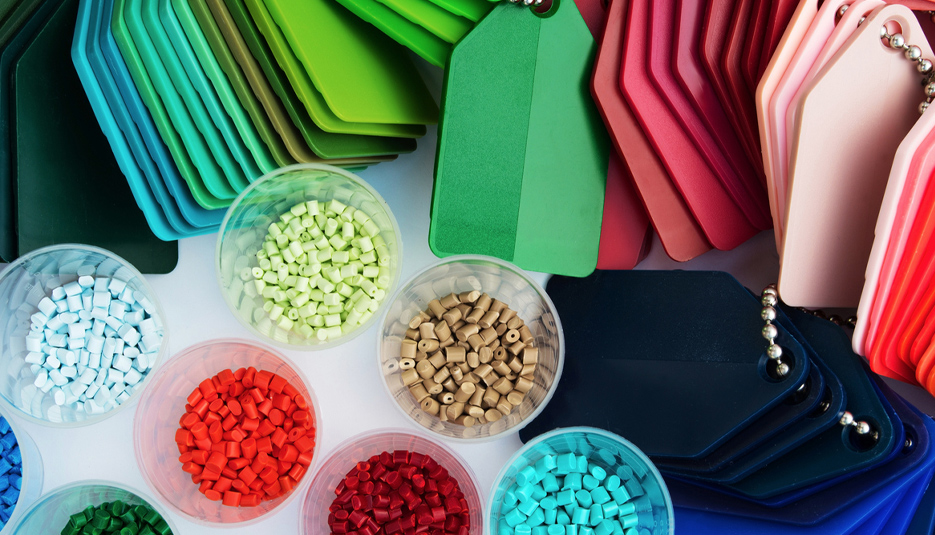
Custom Plastic Mixing and Blending in Salt Lake City
We can custom blend additives and colors in your material or ours. From small batches to semi-loads, we can get you a consistent blend to get the job done efficiently.
Overview of Material Mixing and Blending
Consistent material is essential to consistent manufacturing. When colors, additives, regrind, and base resins are not distributed evenly, the resulting blend can create variations in appearance, processing behavior, and finished-part performance. Reaction Polymers provides custom plastic mixing and blending in Salt Lake City for manufacturers that need accurately combined, production-ready thermoplastic materials. Blends can be created using qualifying material supplied by the customer, resin from Reaction Polymers’ inventory, or a carefully planned combination of both. Material blending is the controlled process of combining two or more ingredients into a uniform mixture. A typical blend may include virgin resin, reprocessed material, clean plastic regrind, color concentrate, fillers, processing aids, or functional additives. The goal is to distribute each ingredient as consistently as possible so the material can be introduced into production without requiring the manufacturer to perform extensive manual mixing at the processing line. Reaction Polymers can support projects ranging from small custom batches to semi-truckload quantities. This flexibility makes the service useful for manufacturers conducting an initial product trial, preparing for a limited production run, or maintaining an ongoing high-volume material program. Each project is evaluated according to the materials involved, required percentages, desired batch size, end use, and level of consistency needed. Manufacturers often use custom resin blending to incorporate regrind into a virgin or reprocessed base material. A controlled blend may help a company increase recycled content while maintaining the processing characteristics or finished quality required for its application. Instead of having operators estimate ratios at the machine, the materials can be combined before delivery to create a more organized and repeatable feedstock. The percentage of regrind that can be used depends on the resin, heat history, cleanliness, application, manufacturing process, and finished-product requirements. Some applications can tolerate a substantial percentage of clean regrind, while others may require a more conservative formulation. Reaction Polymers works with customers to understand the desired ratio and determine whether the available materials are suitable for blending. Custom color blending is another common application. Color concentrate can be mixed into the customer’s resin or a material supplied by Reaction Polymers. Proper distribution helps reduce visible inconsistencies such as streaking, uneven shades, or concentrated pockets of colorant. Manufacturers can provide a target ratio, an established formulation, a Pantone reference, or a physical sample to help define the project. Color results are affected by more than the amount of concentrate in the blend. The natural shade of the base resin, existing color, recycled content, opacity, part thickness, surface finish, and processing conditions can all influence the final appearance. For this reason, customers should provide detailed information about the resin and application before a larger production blend is prepared. Reaction Polymers can also blend functional additives into thermoplastic materials. These may include UV inhibitors, fire retardants, clarifiers, lubricants, impact modifiers, processing aids, and other compatible ingredients. Additives can be incorporated into customer-owned material or combined with an appropriate resin from available inventory. UV inhibitors may be added to help protect suitable plastic products exposed to sunlight. Impact modifiers may be used when an application requires greater toughness, while lubricants and processing aids can influence flow or processing behavior. Clarifiers may improve the appearance of compatible resins, and fire-retardant additives may help a carefully developed compound meet specific performance objectives. The appropriate additive and loading level depend on the resin and intended use. Adding too little may not produce the desired effect, while an excessive amount can increase costs or negatively affect processing and finished properties. Reaction Polymers follows the agreed formulation so colors and additives are combined at controlled ratios. Mixing services may also help manufacturers use existing inventory more effectively. A company may have several lots of compatible resin, clean production regrind, excess color concentrate, or material left from a discontinued product. When those materials are properly identified and suitable for the same application, a custom blend may turn separate inventory into a more useful and manageable raw-material supply. Material identification is critical before different lots are combined. Plastics that appear similar may have different resin types, grades, additives, melt characteristics, or processing histories. Mixing incompatible materials can create poor dispersion, inconsistent flow, weak parts, surface defects, and other production problems. Customers should provide material documentation whenever available, and unknown plastics should be identified before they are introduced into a blend. Cleanliness is equally important. Customer-supplied materials should be free from metal, wood, paper, cardboard, rubber, tape, paint, sealants, floor sweepings, and other contaminants. Each resin and ingredient should be clearly labeled, properly packaged, and protected from moisture or foreign material. Clean input materials give the finished blend a better opportunity to remain consistent and usable. The process begins with a discussion of the required formulation. Helpful information includes the base resin, material form, exact percentages, desired color, additive package, recycled-content target, estimated quantity, manufacturing method, and intended application. Customers should also identify any tolerances or performance requirements that could affect how the blend is prepared. Reaction Polymers can package the completed material in a format suited to storage, transportation, and production handling. Depending on the material and project, the blend may be placed in lined gaylords secured to pallets. This helps keep the material contained and allows customers to move it efficiently through their warehouse or manufacturing facility. Outsourcing material mixing can also save valuable production time. Manual blending requires labor, floor space, equipment, training, and careful documentation. When ratios are prepared differently from one shift or operator to another, the resulting material may not remain consistent. A professionally prepared blend helps simplify the production team’s responsibilities and provides a clearly defined material formulation. Whether you need a small test quantity or an ongoing high-volume resin blend, Reaction Polymers can help develop an efficient approach. Contact the team with details about your materials, required ratios, additives, color, volume, and intended application to begin planning a custom plastic mixing and blending project.
A Company You Can Trust
Material blending requires precision, organization, and a clear understanding of thermoplastics. Every ingredient introduced into a formulation can affect how the material processes and how the finished product performs. Reaction Polymers brings decades of industrial plastic recycling and material-handling experience to each custom blending project. We start by reviewing the materials and desired formulation. This includes identifying the base resin, the source and condition of any regrind, required colorants, additive percentages, batch size, and intended manufacturing process. Establishing these details before blending helps prevent avoidable errors and creates clear expectations for the completed material. Reaction Polymers can use qualifying customer-owned materials or select appropriate materials from its available inventory. This gives clients the flexibility to recover value from their existing resources while receiving support when additional resin, colorants, or additives are required. Proper separation and labeling are maintained throughout the process. Clearly identified materials reduce the possibility of introducing an incompatible resin or incorrect ingredient into the blend. Controlled measurements also help ensure that additives and colors are incorporated according to the agreed formula. Reaction Polymers understands that manufacturers depend on consistency. A blend that changes significantly from one batch to the next can lead to production adjustments, rejected parts, downtime, and wasted resin. We focus on preparing uniform material that can support more efficient processing and predictable results. Clear communication remains important from the initial consultation through packaging and delivery. Customers are encouraged to share formulas, technical data, samples, processing information, and performance targets. When a request requires testing, material identification, custom compounding, or re-pelletizing in addition to blending, Reaction Polymers can help determine the appropriate combination of services. Integrity and long-term relationships guide every project. The objective is to provide a practical material solution rather than simply combine ingredients. Customers receive straightforward guidance about material compatibility, preparation requirements, available quantities, and the steps needed to move the project forward.
Why Clients Choose Reaction Polymers
Manufacturers choose Reaction Polymers because we can support a wide variety of custom blending requirements. Projects can range from small trial batches to ongoing semi-truckload volumes, allowing customers to scale their material programs as production demands change. Clients can provide their own resin, regrind, colors, and additives, or work with Reaction Polymers to select materials from available inventory. This flexibility can help companies use excess inventory, incorporate post-industrial regrind, develop a custom color, or introduce performance additives without managing every ingredient independently. Customers also benefit from having related plastic services available through one experienced company. Reaction Polymers can assist with material identification, shredding, granulating, color matching, additive sourcing, blending, custom compounding, reprocessing, and re-pelletizing. This integrated approach simplifies projects that require more than basic mixing. Controlled blending can improve efficiency at the manufacturing line. Operators receive material prepared to an agreed ratio rather than measuring several components during production. This can reduce handling, streamline material changes, and help maintain greater consistency across shifts and production runs. Reaction Polymers can create blends involving virgin resin, reprocessed plastic, clean regrind, color concentrates, fillers, and compatible additives. The exact formulation is developed around the customer’s material, equipment, product, and desired result. The ability to support both color and performance requirements is another important advantage. A single blend may include a custom color concentrate along with UV protection, impact modification, lubrication, clarification, or another functional ingredient. Combining these materials before production can provide more consistent distribution than adding them separately at the machine. Careful packaging helps preserve the completed blend after processing. Materials can be placed in lined gaylords and secured to suitable pallets for easier transportation, storage, and warehouse handling. Customers receive a consolidated raw material that is ready to move into the next stage of their operation. Most importantly, Reaction Polymers works to understand what the customer is trying to accomplish. Whether the priority is recycled content, consistent color, improved processing, inventory recovery, or a specific material property, the blending program is built around that goal. Share your resin type, material quantities, required blend ratios, colors, additives, processing method, and production objectives with Reaction Polymers. The team can help turn separate materials into a consistent, efficient blend prepared for your manufacturing operation.
Key Benefits:
- Durability: Premium materials and expert craftsmanship ensure your remodel stands the test of time.
- Functionality: Designed around your lifestyle, every layout improves flow, comfort, and usability.
- Curb Appeal: Updated interiors and exteriors that elevate your home’s first impression.
- Energy Efficiency: Modern insulation, windows, and systems that save money year after year.
- Peace of Mind: Licensed, insured, and locally trusted since 1990—our team delivers quality you can rely on.
Gallery



Business Hours
Mon: 8 AM–5 PM
Tue: 8 AM–5 PM
Wed: 8 AM–5 PM
Thu: 8 AM–5 PM
Fri: 8 AM–5 PM
Sat: Closed
Sun: Closed
Content on this website, including text and images, is protected under applicable copyright laws. Copying, downloading, redistribution, or reproduction of this material, in whole or in part, is strictly prohibited. Terms of Use | Privacy Policy