Custom Compounding and Reprocessing
Custom Plastic Compounding and Reprocessing in Salt Lake City
Do you have a need for a unique or specific material? We can help. If you need a filler, color, or additive for your application, we can utilize your materials or use something from our vast inventory and re-pelletize it to suit your needs. If your requirements are extremely unique, we can have a custom material compounded for you.
Overview of Custom Compounding and Reprocessing
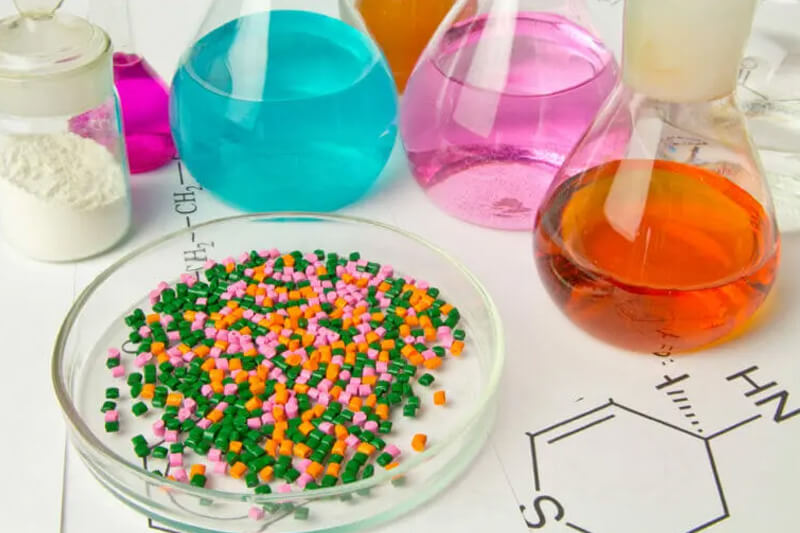
Standard plastic resins do not always provide the exact color, performance, processing characteristics, or recycled content required for a specialized application. Reaction Polymers provides custom compounding and reprocessing in Salt Lake City to help manufacturers develop thermoplastic materials that better match their production goals. Using qualifying customer-owned material or resin from available inventory, we can incorporate selected fillers, colors, and additives before re-pelletizing the blend into a more consistent and manageable raw material. Custom plastic compounding combines a base polymer with other ingredients to modify its appearance, processing behavior, or finished performance. Depending on the application, a manufacturer may need a specific color, greater impact resistance, improved outdoor durability, flame-retardant properties, additional stiffness, enhanced clarity, or another targeted characteristic. Reaction Polymers works with customers to understand these requirements and determine whether an existing material can be adjusted or a more specialized compound should be developed. The process can begin with material already owned by the customer. A manufacturer may have clean production scrap, excess resin, off-color inventory, regrind, or another usable thermoplastic that does not currently meet production requirements. Instead of disposing of that material or allowing it to occupy warehouse space, Reaction Polymers may be able to reprocess it with the appropriate color, filler, or additive package. The resulting material can then be re-pelletized into a form that is easier to store, meter, blend, and feed into manufacturing equipment. Reaction Polymers may also use material from its available inventory when customer-owned resin is unavailable or unsuitable. This gives manufacturers access to a broader range of possible starting materials while allowing the compound to be developed around the needs of the application. Resin selection depends on factors such as the intended product, processing method, performance expectations, color requirements, required quantity, and acceptable level of recycled content. Reprocessing can be especially useful for clean post-industrial plastic that has already been generated during manufacturing. Startup material, production scrap, rejected parts, purgings, runners, sprues, and other suitable thermoplastics may be shredded or granulated before additional processing. The material can then be blended, modified, melted, filtered when appropriate, and converted into pellets. This creates a more uniform raw material that may be easier to incorporate into future production than irregular scrap or loose regrind. Uniformity is an important benefit of re-pelletizing. Loose regrind can vary in particle shape, size, bulk density, and feeding characteristics. Pellets provide a more consistent physical form, which may improve handling and support more predictable feeding into certain manufacturing systems. Actual performance will depend on the resin, formulation, processing conditions, and end-use requirements, so each project should be reviewed carefully before production begins. Custom fillers can be incorporated when an application requires a particular balance of cost and performance. Depending on compatibility and project requirements, fillers may be used to influence stiffness, dimensional stability, density, surface characteristics, or other properties. The correct filler and loading level must be selected thoughtfully because changes to a formulation can also affect melt flow, impact resistance, appearance, shrinkage, and processability. Color can also be introduced during custom compounding. Manufacturers may need to reproduce an existing product color, create a new branded appearance, correct an off-color resin, or convert mixed shades into a more consistent dark compound. Reaction Polymers can evaluate the desired color and determine whether a stock colorant, custom match, or other approach is appropriate. Color matching may be based on a physical sample, target specification, or recognized color reference. Functional additives can be introduced to address specific production or product requirements. Potential options may include UV inhibitors, fire retardants, clarifiers, lubricants, impact modifiers, and other compatible additives. UV protection may be useful for materials exposed to sunlight, while impact modification may help improve toughness in certain applications. Lubricants or processing aids may affect how a resin moves through manufacturing equipment. The exact additive package depends on the base resin, processing method, intended environment, regulatory considerations, and performance goals. Successful custom compounding begins with accurate information. Reaction Polymers will need to understand the resin type, source, color, form, condition, volume, current properties, and desired outcome. Customers should also provide any available technical specifications, sample parts, processing details, acceptable tolerances, and performance targets. The more clearly the application is defined, the easier it is to determine whether an existing formulation can be adapted or a custom material must be developed. Material cleanliness is equally important. Customer-owned plastic should be separated by resin type and kept free from metal, paper, wood, cardboard, tape, rubber, paint, sealants, floor sweepings, and other contaminants. Mixed or unidentified plastics can create inconsistent results and may not be suitable for reprocessing. When the material type is unknown, Reaction Polymers can discuss testing and material identification before moving forward. For highly specialized applications, Reaction Polymers can help coordinate the development of a custom compound. This option may be appropriate when an off-the-shelf resin or straightforward additive blend cannot meet the customer’s requirements. Custom development can involve formulation planning, material selection, color matching, additive selection, sample evaluation, and adjustments before larger-scale production. Custom plastic compounding in Utah can help manufacturers recover value from existing materials, reduce unnecessary waste, and create a resin better suited to a specific application. Rather than purchasing a standard material and attempting to adjust it during production, customers can work with Reaction Polymers to develop a more purposeful formulation. Contact Reaction Polymers with details about your material, application, desired properties, color, additives, estimated volume, and production goals to begin evaluating the right solution.
A Company You Can Trust
Custom compounding requires more than simply mixing resin with an additive. The materials must be compatible, accurately identified, properly prepared, and processed with the finished application in mind. Reaction Polymers brings decades of experience in industrial plastic recycling, resin handling, material preparation, blending, and reprocessing to each project. We take a hands-on approach to thermoplastics. Customer materials can be evaluated for resin type, cleanliness, color, condition, and suitability before they enter the reprocessing system. This early review helps identify contamination, mixed materials, excessive degradation, or other concerns that could affect the final compound. Reaction Polymers also understands that every application is different. A compound intended for injection molding may have different requirements than material used for extrusion or another manufacturing process. The team considers the customer’s equipment, finished product, target properties, production environment, and acceptable recycled content when discussing potential solutions. Clear communication is essential throughout the process. Reaction Polymers works to establish expectations regarding the starting material, proposed formulation, processing steps, packaging, quantity, and intended outcome. Customers are encouraged to provide specifications and samples whenever possible so the finished material can be evaluated against a meaningful target. Careful material management helps protect the integrity of each project. Resins should remain separated and clearly identified, while colors, additives, and fillers must be introduced in controlled amounts. Once the material has been compounded and re-pelletized, it can be packaged for practical storage, transportation, and use. Reaction Polymers approaches custom compounding and reprocessing as a partnership. The objective is not simply to process plastic. It is to help customers identify a practical formulation that supports their manufacturing goals while making responsible use of available materials. When a requested formulation requires more specialized development, we can help arrange custom compounding suited to the application.
Why Clients Choose Reaction Polymers
Manufacturers choose Reaction Polymers because we offer flexibility in both materials and processing. A project may begin with customer-owned production scrap, an existing resin that requires modification, or a suitable material from Reaction Polymers’ inventory. This flexibility allows each solution to be built around the customer’s available resources and performance requirements. Clients also benefit from having multiple services available through one industrial plastic recycling company. Reaction Polymers can help with material identification, shredding, granulating, blending, additive incorporation, color customization, reprocessing, and re-pelletizing. Bringing these capabilities together can simplify project coordination and reduce the need to send material to several separate vendors. Custom compounding can also create new value from materials that are no longer useful in their existing condition. Excess resin, off-color inventory, clean regrind, and qualifying production scrap may be transformed into a formulation that better fits current manufacturing needs. This can help reduce disposal costs and limit the amount of usable plastic sent to landfills. Reaction Polymers can incorporate fillers, colors, and performance additives based on the customer’s objectives. Whether the project calls for a custom color, UV resistance, impact modification, fire-retardant characteristics, improved processing, or another targeted property, the formulation can be evaluated around the intended application. Re-pelletizing provides customers with a more uniform and manageable material form. Pellets are often easier to package, transport, store, blend, and feed than oversized scrap or irregular regrind. This can make reclaimed material more practical for future manufacturing while supporting a cleaner and more organized material-recovery program. Customers also value our straightforward, relationship-focused service. Reaction Polymers works to understand the application before recommending a path forward. When a standard solution is sufficient, we can help identify it. When the requirements are highly specialized, a custom material can be developed or coordinated. From small material challenges to ongoing production programs, Reaction Polymers helps manufacturers find productive uses for thermoplastic resources. Share your base resin, current material form, desired color, required additives, target properties, estimated quantity, and processing method to begin discussing a custom compounding and reprocessing solution.
Key Benefits:
- Durability: Premium materials and expert craftsmanship ensure your remodel stands the test of time.
- Functionality: Designed around your lifestyle, every layout improves flow, comfort, and usability.
- Curb Appeal: Updated interiors and exteriors that elevate your home’s first impression.
- Energy Efficiency: Modern insulation, windows, and systems that save money year after year.
- Peace of Mind: Licensed, insured, and locally trusted since 1990—our team delivers quality you can rely on.
Gallery



Business Hours
Mon: 8 AM–5 PM
Tue: 8 AM–5 PM
Wed: 8 AM–5 PM
Thu: 8 AM–5 PM
Fri: 8 AM–5 PM
Sat: Closed
Sun: Closed
Content on this website, including text and images, is protected under applicable copyright laws. Copying, downloading, redistribution, or reproduction of this material, in whole or in part, is strictly prohibited. Terms of Use | Privacy Policy